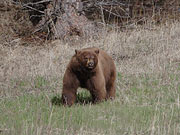
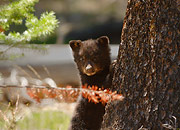
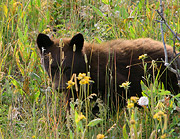
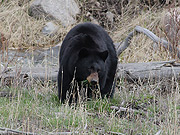
The ranger was grinning like a fool. He held his hand out stopping us from driving up the road
from Roosevelt to Tower, but I couldn't see why. Then I looked in the same direction he was looking.
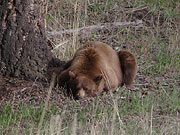
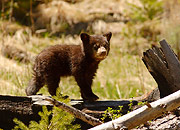
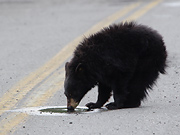
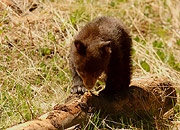
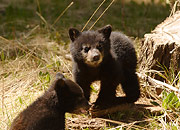
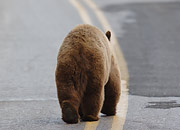
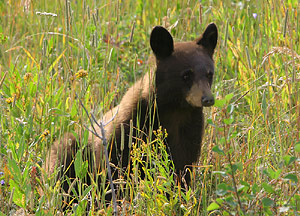
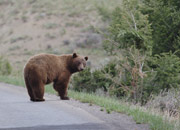
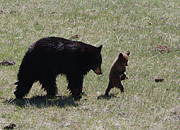
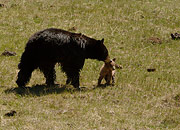
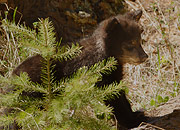
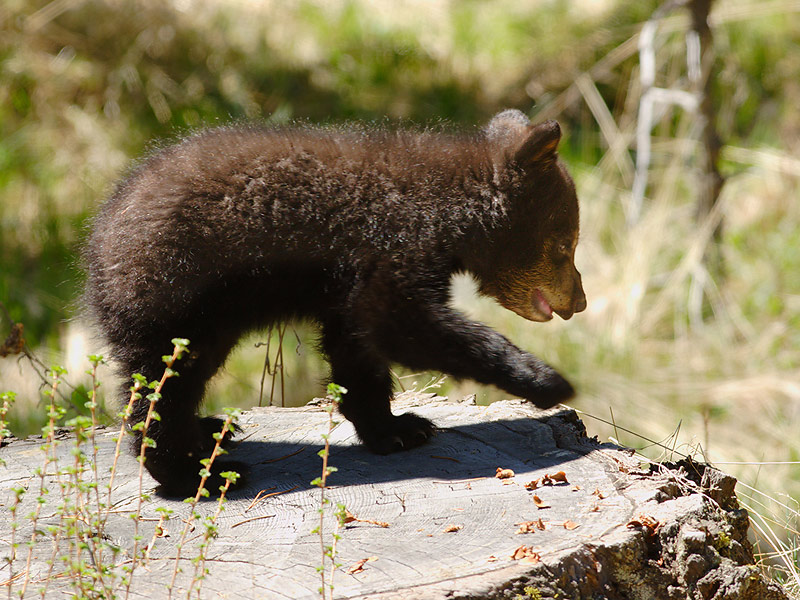
A tiny brown phase black bear cub was motoring right down the side of the
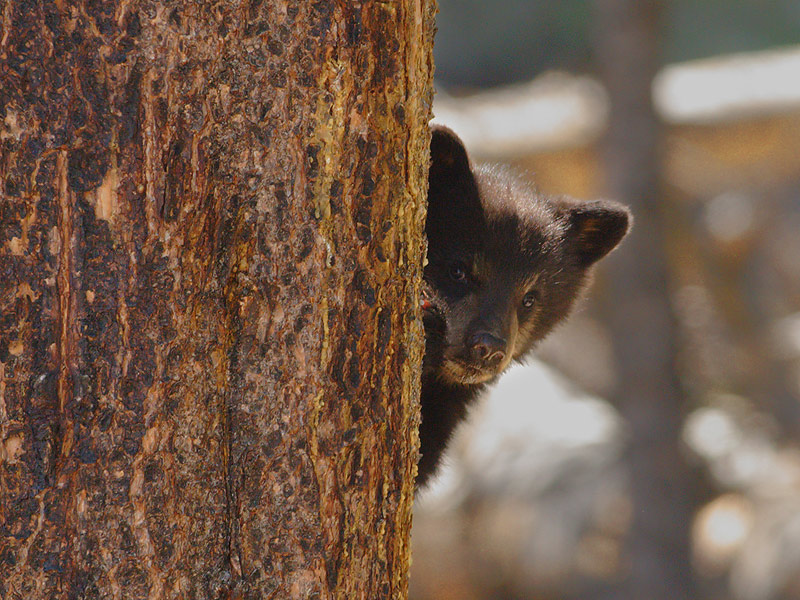
road looking like he had lost his mom.
He padded by about 3 feet away and then went up the road bank looking back at us
sheepishly like he was embarrassed we had seen him. I asked the Ranger if that was one of Rosie's cubs(a local bear of fame)
and he said "they're
all Rosie's". After reading a Yellowstone history book where they talked about Rosie in 1930 I guess I see his point.
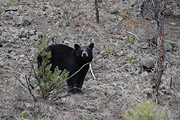
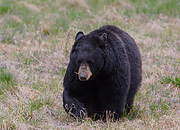
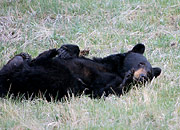
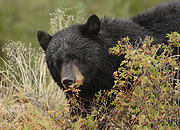
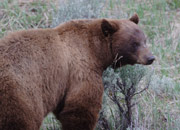
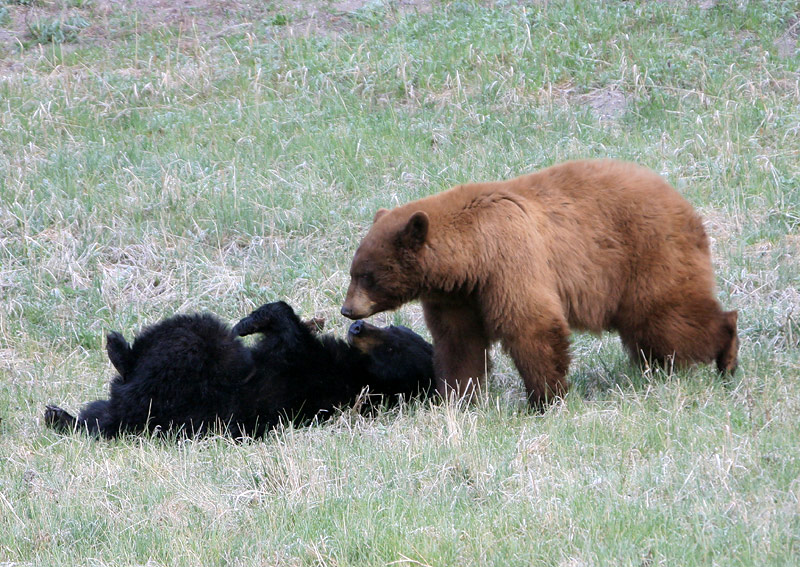
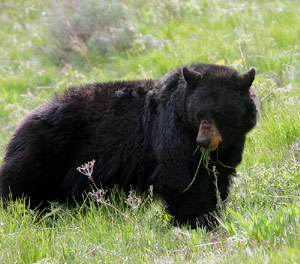
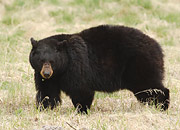
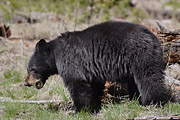
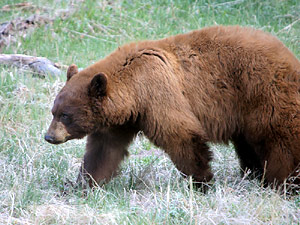
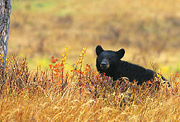
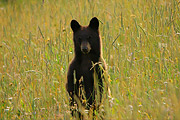
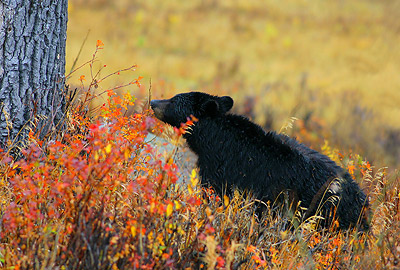
Black bears are comical creatures. With their round ears, short front legs and
long rear legs they just seem deceptively safe, poking around looking for whatever to eat.
Appearing somewhat like the family dog, they just don't scream danger the way the grizzlies do. Although not quite the life
changing event as their larger cousin, the grizzly, seeing a black bear while hiking
is far more interesting than seeing one from a car. Black bears typically run
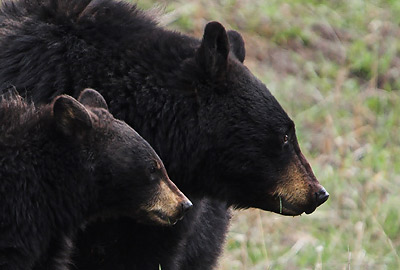
from you if you encounter them on a trail, but if they get aggressive the best thing
to do with a black bear is fight it off. Playing dead is the best bet with grizzlies
but with the black bears that won't work since they usually attack to eat so it pays to know
your bears. They have killed a number of folks in North America so there you go.
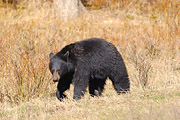
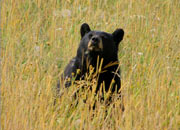
The black bears of Yellowstone seem very tolerant of people. They will typically
graze right next to the road with 20 parked cars and a crowd of people 40 feet away.
The bears look up occasionally at the circus and then go back to their eating. This
docility can lull people into a false sense of security
with a very wild omnivore, but I think generally people are very respectful.
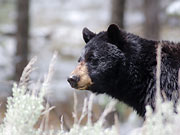
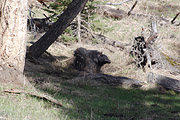
Black bears inhabit the forested parts of the park primarily, but they can be seen almost anywhere in Yellowstone.
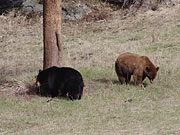
Watch in meadows at the edges of woods for dark round dots, typically black, that seem to be moving.
 From a long distance away they are easy to miss and are generally smaller looking than you would think.
They can show up at carcasses but grizzlies are not their friends and so they are always ready to
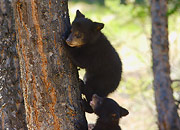
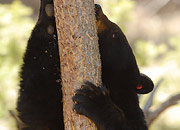
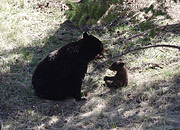
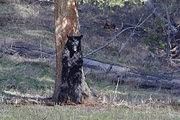
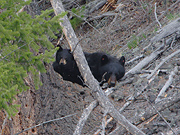
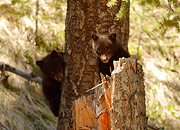
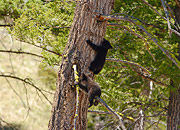
leave should big brother show up. Look high up into the trees also because a cub's first defense is to climb.
Mothers will often shoo their kids up a tree and then go a short distance away and wait for the trouble to leave.
From a long distance away they are easy to miss and are generally smaller looking than you would think.
They can show up at carcasses but grizzlies are not their friends and so they are always ready to
leave should big brother show up. Look high up into the trees also because a cub's first defense is to climb.
Mothers will often shoo their kids up a tree and then go a short distance away and wait for the trouble to leave.
The most reliable area to look for black bears is in the Tower Roosevelt Area. Begin
looking from the petrified tree road all the way to Tower. This location is so
reliable in the spring that when we got bored we'd just say "let's go see the Tower bears" - and we would.
Tim Springer - 2004
|